
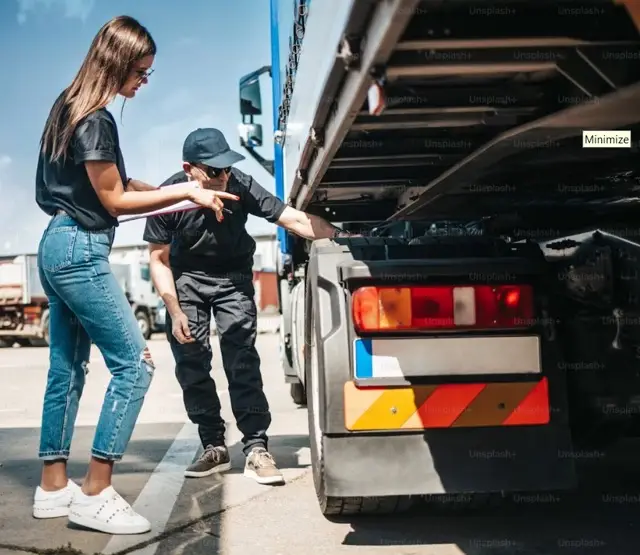
Every experiential marketing manager has lived through the same nightmare: a driver calls in sick, a brand ambassador’s flight gets delayed, and suddenly a fully-booked activation is short-staffed with no backup plan. The traditional fix is to overstaff every stop “just in case.” The smarter fix is to build a team where more people can cover more roles — so one absence doesn’t sink the day.
That’s the case for hybrid roles in experiential marketing, and it’s quickly becoming less of a nice-to-have and more of an operational necessity.
The Problem With Single-Purpose Staffing
Most experiential teams are still built around narrow job descriptions: a driver who drives, a brand ambassador who talks to consumers, a setup crew that builds and breaks down the activation. On paper, this looks organized. In practice, it’s fragile.
Industry staffing research points to the same failure points showing up again and again: no-shows, inadequate product training, and a lack of real-time accountability on the ground, as outlined in AirFresh Marketing’s 2026 experiential staffing guide. When your team is siloed into single-purpose roles, a 10% staffing shortfall doesn’t just mean 10% less capacity — it can mean an entire stop underperforming or getting cancelled, because there’s no one else on-site who can pick up the slack.
What a Hybrid Role Actually Looks Like
A hybrid experiential team member isn’t someone doing two jobs badly instead of one job well. It’s someone trained to move fluidly between the tasks a tour stop actually needs, depending on what the day throws at them. In practice, that often looks like:
- A CDL driver who can also run the activation. Beyond getting the vehicle safely from city to city, professional CDL drivers trained for experiential tours can handle setup, teardown, and basic troubleshooting on-site — turning drive time into productive time instead of dead time between stops.
- A brand ambassador who understands logistics. Staff who can flex into loading, inventory checks, or even short driving legs reduce the number of people you need on payroll for a multi-stop tour.
- A team lead who wears both hats. Someone who can manage the schedule, solve a venue problem, and step onto the floor to engage consumers if the primary ambassador is out sick.
This is the model behind our flexible driver solutions — staff built to cover more than one function on a tour, so a single absence or delay doesn’t take an entire stop offline.
Why This Actually Improves ROI
Hybrid staffing isn’t just a risk-management play — it improves the economics of the whole campaign. Fewer total headcount needed per stop means lower payroll and travel costs. Faster setup and teardown, because the same people who arrived with the vehicle can start building immediately instead of waiting on a separate crew. And because experiential campaigns already deliver strong returns — Cvent’s research puts roughly 48% of brands at a 3:1 to 5:1 ROI on experiential spend, per its 2026 experiential marketing statistics — tightening the cost side of that equation without cutting quality is one of the more direct levers a marketing team has.
There’s also a resilience dividend. A tour with cross-trained staff can absorb a sick day, a delayed flight, or a last-minute venue change without needing to scramble for a temp hire who doesn’t know the brand, the product, or the route. That’s the difference between a hiccup and a cancelled stop.
Skills to Look For When Building a Hybrid Team
Not everyone can — or should — be cross-trained. When you’re evaluating staff or a staffing partner for hybrid roles, look for:
- A valid CDL with clean driving history, for anyone who might need to move a vehicle between stops.
- Product and brand training depth, not just a script — staff need to be able to answer real questions, not recite talking points.
- Comfort with physical setup work, since hybrid roles often mean building and breaking down activations, not just standing behind a table.
- Communication and problem-solving under pressure, since hybrid staff are often the ones absorbing a schedule change or venue issue in real time.
- A track record on multi-city tours, ideally verifiable through prior program results rather than a resume alone.
Where to Start
If your current team is built entirely around single-purpose roles, you don’t need to rebuild it overnight. Start with your next multi-city tour: identify the two or three roles most likely to create a bottleneck if someone doesn’t show up, and cross-train or hire specifically to cover that gap. Our tour management and mobile roadshow teams build hybrid staffing into the plan from day one, which is often the easiest way to see the model in action before rolling it out across your full calendar.
For a deeper look at why brands are shifting budget toward experiential in the first place, see why experiential marketing is the future of advertising.
Frequently Asked Questions
1. What is a “hybrid role” in experiential marketing? A hybrid role is a staff position cross-trained across more than one function — most commonly driving, activation setup/teardown, and brand ambassador duties — so one person can cover multiple needs on a tour stop instead of requiring a separate specialist for each task.
2. Does hybrid staffing cost more than traditional single-purpose staffing? Generally, no — it tends to lower total costs because fewer people are needed per stop to cover the same range of tasks. It also reduces the hidden cost of no-shows and last-minute temp hires, which are far more expensive than proactive cross-training.
3. Is a CDL driver who also does brand ambassador work as effective as a dedicated ambassador? When properly trained, yes. The goal isn’t to replace deep brand expertise with a generalist — it’s to make sure every person on-site has enough product and brand training to step in credibly if needed, while still having a lead ambassador role for the core consumer interaction.
4. How do we know if our team needs hybrid roles? If a single no-show, delay, or callout has ever caused a stop to run short-staffed or get scaled back, that’s a sign your staffing model has a single point of failure. Hybrid roles are the most direct fix.
5. How do we start building a hybrid experiential team? Start with your highest-risk role — usually the one with the fewest backups, such as your driver — and cross-train or hire for a second function. Many staffing partners, including experiential-specific ones, already build hybrid capability into their driver and tour staff by default, which can be faster than retraining an existing single-purpose team.
Want a tour crew that’s built for flexibility from the start? Get in touch to talk through hybrid staffing for your next activation.